Best Hospital in Ghatkopar, Mumbai | Zynova Shalby Hospital


Is Robotic Surgery Safe? Joint Replacement Mumbai
- Home
- Is Robotic Surgery Safe? What Every Patient Should Know Before Their Joint Replacement
- admin
- 0 Comments
If you are considering a knee replacement or hip replacement, there is a good chance you have come across the term “robotic surgery” and wondered what it actually means for you. More and more patients searching for robotic knee replacement in Mumbai or looking for the best orthopedic hospital in Mumbai are asking the same thing before they book a consultation. Is it just a buzzword? Is it genuinely safer? And does it make a difference if you have diabetes, hypertension, or other health conditions?
These are fair questions. Patients who ask them tend to make better decisions. Let us go through everything you need to know before you walk into a surgeon’s consultation.
What Is Robotic Joint Replacement Surgery?
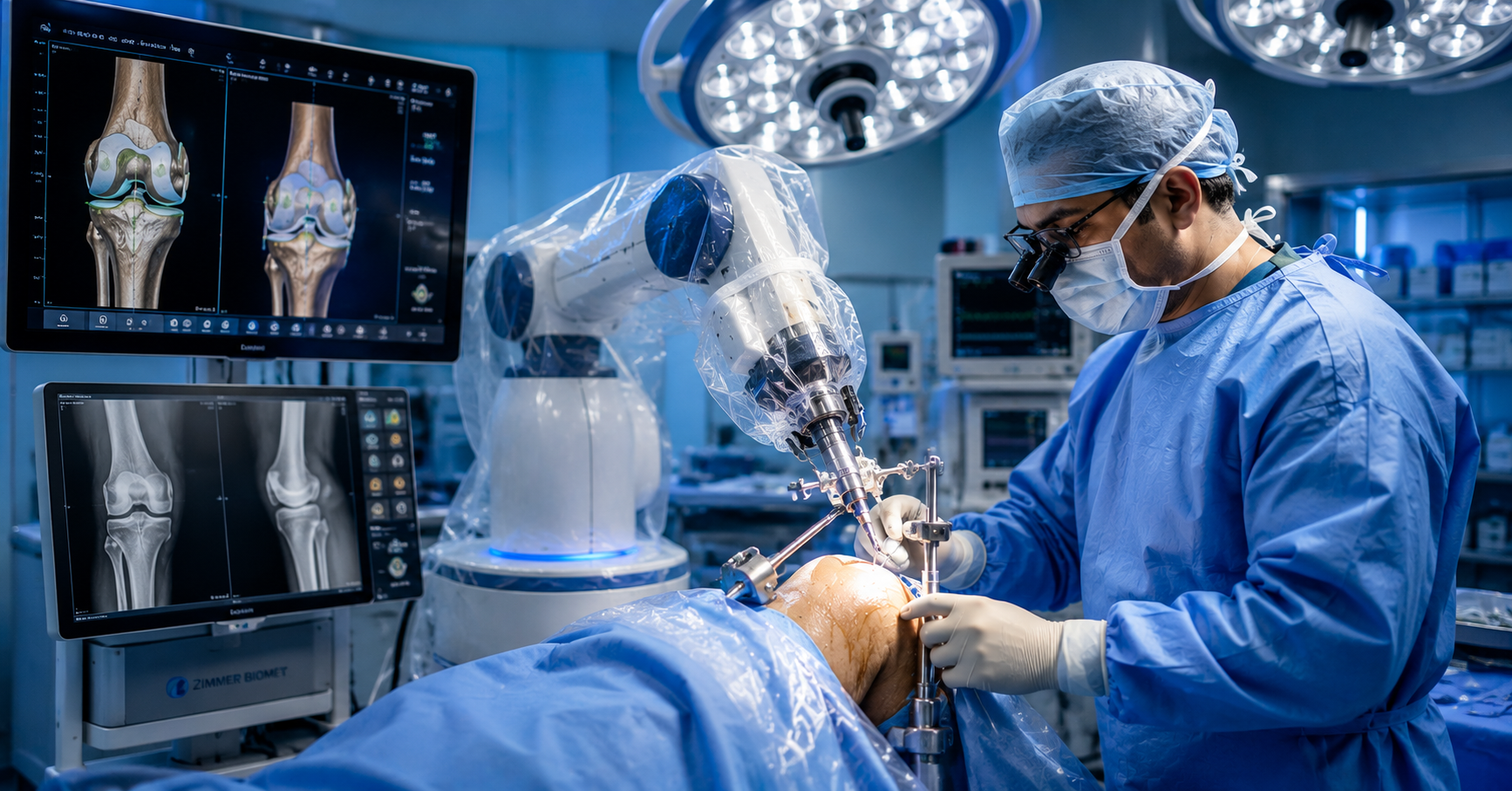
Robotic joint replacement surgery is not surgery performed by a robot on its own. A trained orthopedic surgeon is in full control at every step. The robot is a precision tool, like a GPS-guided assistant, that helps the surgeon plan and execute the procedure with a level of accuracy that is very difficult to achieve by hand alone.
Before the operation, your surgeon uses CT or MRI imaging scans to build a detailed 3D model of your specific joint. That model becomes the blueprint for the entire procedure. Bone density, joint angles, ligament attachments, and the exact shape of your anatomy are all mapped out before the first incision is made.
During surgery, the robotic system tracks your anatomy in real time and provides feedback if any movement goes outside the pre-planned boundaries. Think of it as a co-pilot that is watching every millimeter. The surgeon makes all the decisions. The robot makes those decisions more precise.
This approach is what is sometimes called AI based knee replacement surgery because the software behind these systems uses intelligent mapping and planning algorithms to customize the surgical plan for each individual patient. No two knees are exactly the same, and that is exactly the point.
Is Robotic Surgery Safe?
Yes. Robotic surgery safety is well-supported by clinical data gathered over more than a decade of use across thousands of patients globally. Studies comparing robotic vs traditional knee replacement consistently show that robotic-assisted procedures result in more accurate implant placement, less soft tissue damage during surgery, and lower rates of revision surgery over time.
Robotic surgery success rate data from multiple peer-reviewed publications shows that patients who undergo robotic-assisted procedures have measurably better implant alignment compared to conventional manual techniques. Implant malalignment is one of the leading causes of early joint failure and the need for a second surgery, so getting alignment right the first time is not a minor detail. It has consequences that show up five, ten, and fifteen years later.
That said, robotic surgery is not a guarantee of perfection. The outcome of any surgical procedure still depends on the surgeon’s experience and training, the quality of the implant being used, the patient’s overall health before surgery, and the rehabilitation program followed after surgery. The robot improves accuracy. Everything else still has to be done right by the surgical team.
One thing worth knowing: the safety record of robotic joint replacement surgery compares favorably to traditional surgery across standard complication metrics including infection rates, blood loss, nerve injury, and post-operative pain. For most patients who are otherwise good surgical candidates, adding robotic assistance does not introduce new risks. It reduces existing ones.
Robotic vs Traditional Knee Replacement: What Actually Changes?
With robotic knee replacement in Mumbai becoming more accessible at specialized centers, patients often ask what the practical difference is when they are on the operating table and in recovery.
In traditional knee replacement, the surgeon uses mechanical jigs and guides along with personal judgment built from years of experience to cut bone and position the implant. Experienced surgeons do this well. But there is inherent variation from case to case, and human perception of angles and depth, even in skilled hands, has limits.
In robotic orthopedic surgery, the system maps your anatomy before the first cut is made and continuously checks alignment throughout every step of the procedure. If the saw or instrument drifts even slightly outside the planned zone, the system responds immediately. The surgeon is always aware of exactly where they are relative to the plan.
Minimally invasive joint replacement is more consistently achievable with robotic assistance. Because the planning is precise, surgeons can use smaller incisions and disturb less muscle and soft tissue around the joint. Smaller incisions mean less muscle damage. Less muscle damage means less post-operative pain and faster return to normal movement.
Precision knee replacement Mumbai centers that use robotic systems also report more consistent patella tracking, better ligament balance, and a more natural feeling joint after surgery. Patients often describe their replaced joint as feeling closer to their original knee than they expected. These details affect how the joint performs for years and decades, not just in the hospital.
One more practical difference: robotic-assisted surgery typically produces more consistent results across different patient body types. Patients who are heavier, have unusual bone geometry, or have had previous surgeries on the same joint tend to benefit particularly from the individualized pre-surgical mapping that robotic systems provide.
Benefits of Robotic Surgery for Patients
Benefits of robotic surgery go beyond the operating room. Here is what changes from the moment surgery ends:
Greater precision during implant placement. The robotic system operates within tolerances of less than one degree and one millimeter in many cases. Implant position, rotation, and limb alignment are controlled with a level of accuracy that manual technique cannot consistently replicate across all cases.
Less bone removal. Because the surgical plan is mapped out before cutting begins, surgeons can be more conservative with how much healthy bone they remove. Preserving bone matters for the long-term health of the joint and for patients who may need revision surgery in the future. Less bone removed now means more options available later.
Less blood loss. Robotic-assisted procedures typically involve less soft tissue trauma, which translates to reduced intraoperative blood loss. This is particularly relevant for older patients or those with cardiovascular concerns.
Faster recovery. Patients undergoing minimally invasive joint replacement via robotic-assisted methods tend to walk sooner after surgery, leave the hospital in fewer days, and return to daily activities more quickly. Knee replacement recovery time with robotic assistance often sees patients regaining functional movement within 4 to 6 weeks. With traditional approaches, 8 to 12 weeks is more common for reaching the same functional milestones.
Hip replacement recovery time follows a similar pattern. Robotic hip replacement in Mumbai procedures have shown lower dislocation rates after surgery and better implant positioning, both of which directly affect how quickly patients can bear weight and move independently without assistive devices.
Lower long-term risk of revision surgery. A well-aligned joint replacement lasts longer. Getting the placement right the first time reduces the chance of needing the procedure redone five or ten years later. Revision joint replacement surgery is more complex, carries higher risk, and has a longer recovery than the original surgery. Avoiding it is not a small benefit.
Reduced post-operative pain. Less tissue damage during surgery generally means less inflammation and pain during recovery. Many robotic-assisted joint replacement patients report needing less pain medication in the days following surgery compared to traditional procedure patients.
Is Robotic Surgery Safe for Diabetic Patients?
Robotic surgery for diabetic patients is a specific and important question because diabetes affects multiple aspects of surgical safety. It slows wound healing, raises infection risk, can complicate anesthesia management, and affects how the body responds to the physical stress of surgery. These are genuine concerns, not things to minimize.
The honest answer is that robotic surgery does not eliminate the risks associated with diabetes. No surgical approach does. What robotic-assisted surgery does is reduce the size of incisions, reduce trauma to surrounding soft tissue, and shorten the overall procedure time when performed by experienced surgeons. All of these factors work in favor of diabetic patients, who benefit significantly from less tissue exposure, faster wound closure, and a shorter period of physical stress on the body.
Patients with well-controlled diabetes and HbA1c levels in an acceptable range, and with no significant kidney, vascular, or cardiac complications, are generally good candidates for robotic joint replacement surgery. The pre-operative preparation period is often used to optimize blood sugar control specifically to bring surgical risk down to acceptable levels.
Patients with poorly controlled blood sugar, active foot ulcers, or serious kidney or vascular disease need to address those issues before surgery regardless of whether traditional or robotic technique is used. Surgical timing in diabetic patients is not arbitrary. It is based on where the patient’s systemic health actually stands.
At Zynova Shalby Hospital, the pre-surgical evaluation for diabetic patients includes endocrinology review alongside orthopedic assessment. Joint pain treatment Mumbai at this level means treating the joint in the context of the whole person, not in isolation from existing health conditions.
Who Is a Good Candidate for Robotic Joint Replacement?
Not every patient with knee or hip pain needs surgery. Not every patient who needs surgery is best served by the robotic-assisted approach. Understanding who benefits most helps patients have more productive conversations with their surgeons.
Robotic joint replacement is generally well-suited for patients who have severe arthritis that has not responded adequately to non-surgical treatment including physiotherapy, weight management, anti-inflammatory medications, and joint injections. It is also suitable for patients with complex anatomy, significant deformity, or prior joint injuries that make conventional surgical planning less reliable.
Patients with obesity benefit from robotic assistance because the individualized pre-surgical mapping can account for anatomical variations that make manual technique more challenging. Younger, more active patients also benefit because precise alignment improves implant longevity, which matters more when the replacement needs to last 25 to 30 years rather than 10 to 15.
Patients who may need additional caution before proceeding include those with active infection anywhere in the body, severe cardiovascular disease that makes anesthesia high risk, or bleeding disorders that need to be managed before surgery.
An honest orthopedic evaluation will tell you clearly which category you fall into. If a surgeon recommends surgery without a thorough review of your imaging, your medical history, and your non-surgical treatment history, that is worth questioning.
What Patients in Mumbai Should Know About Accessing Robotic Joint Replacement
Robotic hip replacement in Mumbai and robotic knee replacement in Mumbai are now available at a growing number of centers. But the availability of robotic technology and the quality of robotic surgical programs are not the same thing. Having the machine is not the same as having the expertise to use it well.
When evaluating a joint replacement surgery Mumbai provider, there are specific things worth asking directly:
How many robotic-assisted joint replacements has this specific surgeon performed, and how many per year? Robotic surgery has a learning curve just like any skill. The difference in outcomes between a surgeon who performs 20 robotic cases per year and one who performs 200 is not trivial.
What robotic platform is used and what is its regulatory approval status? Systems with established clinical track records and long-term outcome data provide more confidence than recently introduced platforms with limited follow-up.
What does the complete care pathway look like? Pre-surgical evaluation, surgical technique, post-operative pain management, physiotherapy protocol, and follow-up schedule all matter for the final outcome. A good robotic surgery program is not just the surgery itself.
Is there a multidisciplinary team available for patients with comorbidities? Patients with diabetes, hypertension, cardiac conditions, or kidney disease need specialists beyond the orthopedic surgeon involved in their care. A hospital that can provide this coordination in one place significantly reduces the risk of complications going unmanaged.
Orthopedic surgeon in Mumbai practices that offer robotic surgery as part of a broader orthopedic program, rather than as a standalone service, tend to have better infrastructure around the surgical procedure itself.
Questions Patients Often Feel Embarrassed to Ask
Some concerns come up repeatedly in patient conversations but rarely get asked directly in a consultation. Here they are, answered plainly.
I am scared of having a robot operating on me.
A robot is not operating on you. Your orthopedic surgeon is. The robotic system is a precision instrument that the surgeon controls and can override at any moment. Calling it “robotic surgery” is a bit like calling laser eye surgery “laser surgery” and being worried about a laser making decisions. The laser is a tool. So is the robot.
Is robotic surgery only for younger or healthier patients?
No. Robotic orthopedic surgery India outcomes have been studied across age groups including patients in their 70s and 80s. Older patients with well-managed chronic conditions do very well with robotic-assisted joint replacement. The individualized planning that robotic systems provide is often particularly useful for older patients who may have more anatomical variation or bone quality considerations.
Will my recovery be the same as traditional surgery?
Recovery timelines are generally shorter with robotic-assisted procedures, but recovery is still a real process that requires active participation. Physiotherapy is non-negotiable. Restricted activity for a period is still required. The difference is that most patients move through the recovery stages faster and report less pain during the process.
What if the robot malfunctions mid-surgery?
Robotic surgical systems have multiple redundant safety checks built in. If the system detects that it has moved outside planned parameters, or if any component behaves unexpectedly, it alerts the surgeon and stops. The surgeon can pause the procedure, assess, override the system, or proceed manually. The robot never acts independently of the surgeon’s control.
How long does a robotic joint replacement surgery take?
Procedure times vary depending on complexity, but robotic-assisted joint replacement surgery typically takes between 60 and 90 minutes for straightforward cases. More complex cases take longer. The pre-surgical mapping done with robotic systems can actually make the operative portion more efficient because the planning is done before the patient is on the table, not during.
Will my insurance cover robotic joint replacement surgery?
Coverage varies by insurer and policy. Many major health insurance providers in India now cover robotic-assisted joint replacement at approved hospitals. It is worth confirming with your insurer before the consultation so there are no surprises. The team at hospitals like Zynova Shalby can help navigate the pre-authorization process.
What to Expect During Your Consultation and Pre-Surgery Period
Walking into a consultation for robotic orthopedic surgery India is less intimidating when you know what to expect. Here is a realistic picture of the process:
Your first consultation will involve a review of your imaging, a physical examination, and a discussion of your symptoms and their impact on your daily life. If you have been referred with existing X-rays or MRI scans, bring them. If not, the hospital will arrange the imaging needed.
If surgery is recommended, the pre-operative phase includes a complete health evaluation covering blood work, cardiac clearance if needed, diabetes management review, and an assessment of any medications that need to be adjusted before surgery. Patients on blood thinners, for example, need a managed transition period before the procedure.
The robotic surgical plan is built from your CT scan, typically taken one to two weeks before the procedure. Your surgeon reviews this plan with you before the surgery date so you understand what is being done and why.
Hospital stay after robotic joint replacement is typically two to three days for most patients, sometimes less. Physiotherapy begins within 24 hours of surgery in most cases. The goal of early movement is to prevent stiffness, reduce swelling, and start rebuilding strength while the joint is still in the optimal window for early recovery.
Why Zynova Shalby Hospital for Robotic Orthopedic Care in Mumbai
Zynova Shalby Hospital is among the best orthopedic hospital in Mumbai for patients seeking advanced robotic surgery hospital Mumbai level care. The center brings together experienced orthopedic surgeons, advanced robotic surgical platforms, and a rehabilitation program designed to support patients from pre-surgery planning through full recovery.
The orthopedic team at Zynova Shalby has performed a high volume of robotic-assisted joint replacements covering both robotic knee replacement in Mumbai and robotic hip replacement in Mumbai procedures. Volume matters in surgical outcomes. Higher case numbers mean more refined technique, better anticipation of complications, and a more experienced support team.
For patients exploring joint pain treatment Mumbai options, the evaluation process at Zynova Shalby begins with a proper diagnostic workup. Not every patient with joint pain needs surgery. Not every surgical candidate needs robotic assistance. The recommendation you receive will be based on your specific anatomy, health status, and functional goals, not on a standard protocol applied to everyone.
Patients with diabetes, hypertension, cardiac conditions, or other comorbidities receive coordinated care that involves the relevant specialists alongside the orthopedic team. This coordination is what separates a genuinely comprehensive surgical program from one that handles the surgery and leaves the rest to chance.
The rehabilitation infrastructure at Zynova Shalby is built around the same commitment to outcome that drives the surgical side. Post-operative physiotherapy, pain management, and follow-up monitoring are structured to support the fastest possible safe recovery.
So, Should You Consider Robotic Joint Replacement?
Is robotic surgery safe? Yes, for appropriately selected patients, with an experienced surgical team, at a center that has the infrastructure to support the full care pathway.
It is not magic. It is precision applied at every stage of a procedure where small errors have long-term consequences. In joint replacement surgery, getting the alignment right by even one or two degrees changes how the implant wears, how the joint feels, and how long the whole thing lasts.
If you are living with chronic knee or hip pain, if conservative treatments have not given you adequate relief, and if you have been told that joint replacement may be necessary, then understanding your surgical options thoroughly is the right next step. That means asking specific questions about technique, surgeon experience, implant selection, and rehabilitation, not just accepting a general recommendation without context.
Bring your scans. Bring your medical history. Ask about robotic orthopedic surgery India specifically and what it would mean for your anatomy and your health situation. A surgeon confident in their approach will answer those questions clearly. That conversation will tell you a great deal about whether you are in the right place.
Leave a Comment