Best Hospital in Ghatkopar, Mumbai | Zynova Shalby Hospital


Monsoon Joint Pain & Knee Pain: Causes, Treatment and Relief
- Home
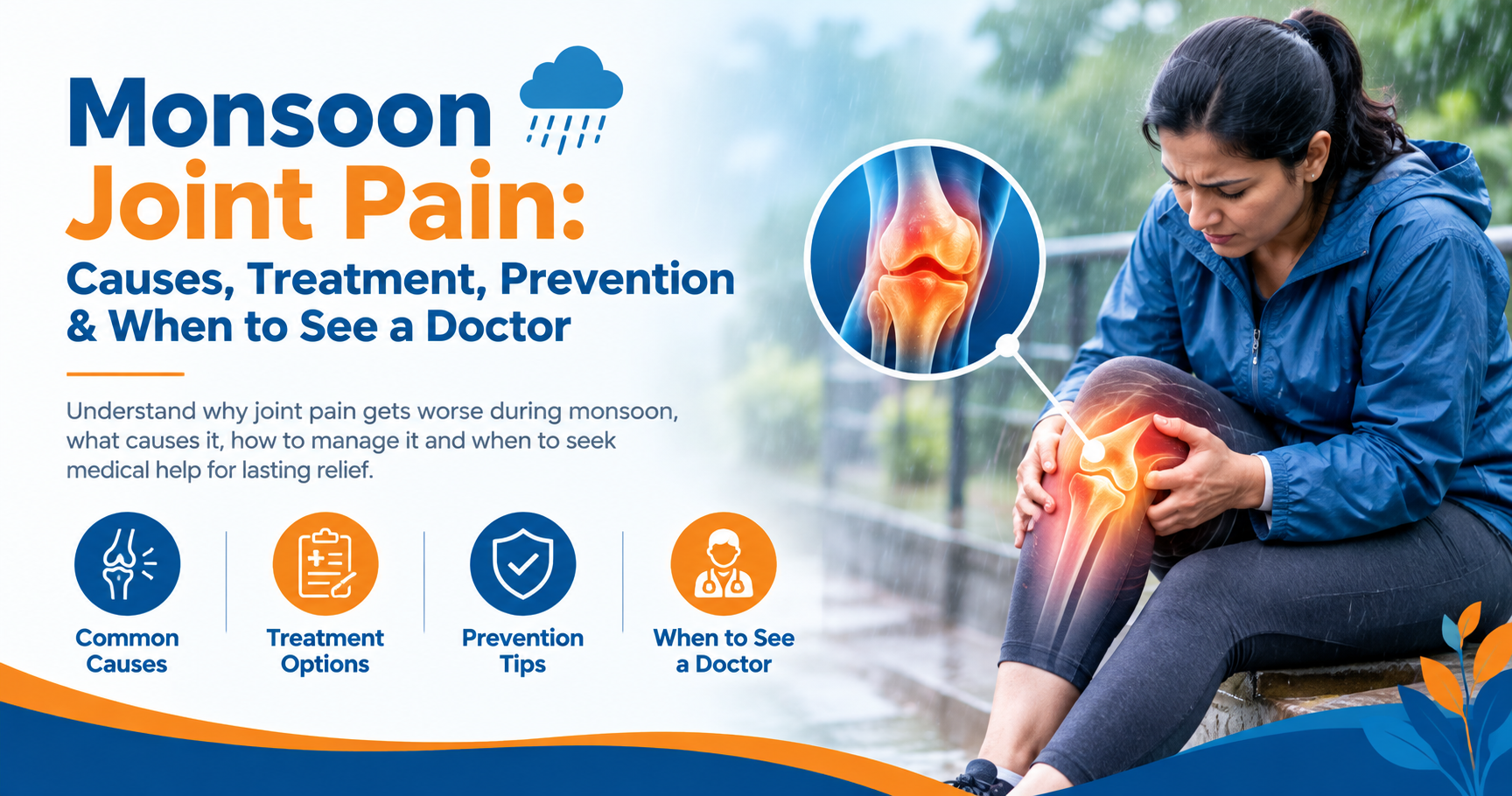
- Monsoon Joint Pain: Causes, Treatment, Prevention & When to See a Doctor
- admin
- 0 Comments
If your knees, shoulders or fingers seem to ache more once the rains set in, you are not imagining things. Joint pain during monsoon is one of the most common complaints in orthopaedic clinics between June and September. The same few lines come up every year: “It was fine all summer, then the rains started and my knee just stiffened up.” Or the classic: “Barish aayi toh dard badh gaya.”
This article walks through why that happens, what actually causes monsoon joint pain, how to tell it apart from a genuine underlying joint problem, and what to do about it safely, at home and with medical help.
Why Does Joint Pain Get Worse During Monsoon?
Joint pain often feels worse during monsoon because of a combination of factors, not the rain by itself. Lower physical activity, prolonged indoor sitting, humidity, temperature drops and pre-existing joint conditions like arthritis can all add up to more stiffness and discomfort during the rainy season.
Picture someone with mild knee arthritis who walks every evening through summer, takes the stairs, stays generally active. The rains begin, the evening walk gets skipped a few days in a row, the roads turn slippery, and without really deciding to, this person is now sitting far more than usual. That drop in movement alone is enough to make a joint feel stiffer, even before you factor in anything about the weather itself. It’s a pattern that shows up again and again in clinic, and it’s a large part of why joint pain in rainy season feels like a seasonal complaint, when really the underlying joint condition has usually been sitting there all along, just less active.
Does Rain Actually Cause Joint Pain?
Rain does not directly cause joint damage. Some people with existing joint conditions, particularly osteoarthritis or other forms of arthritis, do report more discomfort when the weather changes. But the exact reason is not fully understood, and it varies a lot from person to person. Weather is best thought of as a possible trigger, not a true cause.
Researchers have looked at the weather and joint pain link for decades, and honestly, the results are mixed. Some people are clearly more sensitive to shifts in humidity or atmospheric pressure. Others notice nothing at all, even with a similar joint history. What most doctors agree on is simpler than either extreme: weather does not create new joint disease. It may just make an already sensitive joint more noticeable for a stretch of time.
What About Atmospheric Pressure and Humidity?
Atmospheric pressure and humidity come up a lot in this conversation, and they are worth a mention, carefully. The tissue around a joint may respond slightly to these shifts, particularly in people who already have some joint wear and tear. Treat this as a possible contributing factor, not a proven cause of joint damage. Rain, cold air or humidity does not wear down cartilage, and it does not create arthritis in a joint that was healthy to begin with.
Common Causes of Joint Pain During the Rainy Season
Here’s the thing worth remembering: causes of joint pain during monsoon are usually the same causes that exist all year round. Rainy weather can turn the volume up on symptoms, but it almost never acts alone. Common contributors include:
- Existing arthritis, including osteoarthritis, rheumatoid arthritis or other inflammatory joint conditions
- Osteoarthritis, the gradual wear of cartilage that cushions a joint, most common in the knees
- A previous joint injury, such as an old ligament tear or fracture, that becomes more sensitive with disuse
- Muscle weakness around a joint, particularly the muscles supporting the knee
- General joint stiffness from reduced movement
- Prolonged sitting during rainy days, at home or at work
- Increased body weight, which places extra load on weight-bearing joints like the knees and hips
- Tendon or ligament strain from sudden or unaccustomed activity
- Inflammatory joint conditions that flare up periodically regardless of season
- Sudden changes in activity level, such as going from very inactive to very active over a short period
This is exactly why a doctor will ask several questions before agreeing that body pain during monsoon is purely weather-related. A proper history often turns up an underlying joint issue that was already there, just quieter, until the routine changed.
Why Can Knee Arthritis Feel Worse During Monsoon?
The knee is a weight-bearing joint that depends heavily on regular movement and strong surrounding muscles. When movement decreases, as often happens during monsoon, the knee can feel stiffer and less flexible. For someone who already has knee arthritis, this combination of reduced activity, muscle weakening and possible weather sensitivity can make arthritis pain during monsoon more apparent.
Knee pain during monsoon shows up in a few recognisable patterns:
- Stiffness that is worse first thing in the morning or after sitting for a while
- Discomfort while climbing stairs or getting up from a low chair
- A feeling of heaviness or reduced flexibility in the knee
- Mild swelling around the joint after a long day of standing or walking
- Pain that improves somewhat once the joint is warmed up and moving
For people without arthritis, occasional knee stiffness during monsoon is usually temporary and related to lower activity levels. For people who already have osteoarthritis knee pain, the same rainy season can bring a more noticeable increase in symptoms, sometimes described as an arthritis flare-up.
Understanding Osteoarthritis in Simple Terms
Osteoarthritis is a common joint condition where the smooth cartilage that cushions the ends of bones gradually wears down over time. Without this cushioning, movement can become stiffer and sometimes painful, particularly in weight-bearing joints like the knee. It develops gradually over years and is influenced by age, previous injury, body weight and joint use, not by a single season or one episode of rain.
The Key Difference: Temporary Weather-Related Stiffness vs Persistent Joint Pain
This distinction matters more than almost anything else in this article, so it is worth explaining clearly.
Temporary weather-related stiffness tends to:
- Come on gradually as the weather changes
- Improve with gentle movement, stretching or warmth
- Not involve significant swelling, redness or fever
- Settle down within a short period once activity levels return to normal
- Affect people with or without a known joint condition
Persistent joint pain caused by an underlying condition tends to:
- Continue or worsen regardless of the weather
- Come with stiffness that does not ease after moving around
- Involve swelling, warmth or visible changes around the joint
- Limit daily activities like walking, climbing stairs or standing for long periods
- Not fully resolve with rest, home care or the change of season
If your discomfort fits the first pattern, simple self-care is often enough. If it fits the second pattern, monsoon weather is unlikely to be the real explanation, and the pain deserves a proper medical look. A useful rule of thumb is this: mild stiffness that comes and goes with activity is usually less concerning than pain that steadily builds, restricts movement or keeps returning with swelling. Chronic joint pain or chronic knee pain that has been present for weeks should not automatically be attributed to the rain.
How to Get Relief From Joint Pain During Monsoon
What helps joint pain during monsoon? Gentle movement, stretching, weight management, warm compresses for stiffness, supportive footwear and staying consistent with any existing treatment plan can all help manage symptoms. These measures support joint pain relief at home for mild, temporary stiffness, but they are not a substitute for medical treatment when pain is persistent or severe.
A few practical steps that are genuinely useful during the rainy months:
- Keep moving in small amounts. Short, frequent movement is often better for a stiff joint than long periods of complete rest.
- Stretch regularly. Gentle stretching of the muscles around the hips, knees and shoulders can ease stiffness, especially in the morning.
- Use warm compresses where suitable. Warmth can help relax stiff muscles and improve comfort, particularly before movement or exercise.
- Avoid staying inactive for long stretches. If you have been sitting for an hour or more, take a short break to stand and move.
- Maintain a healthy weight. Extra body weight adds direct load to the knees and hips, and even modest weight reduction can ease joint stress over time.
- Wear supportive, non-slip footwear. Slippery monsoon surfaces increase the risk of falls, which can injure an already sensitive joint.
- Continue any existing treatment plan. If you are already under care for arthritis or a previous injury, monsoon is not the time to stop your prescribed exercises or medicines without medical advice.
These are home remedies for joint pain in the true sense of the term: supportive measures, not cures. If pain is more than mild, or medicines are being considered, that decision should involve a doctor, particularly for people with other health conditions or those already on regular medication.
What Exercises Can Help Knee Pain During the Rainy Season?
Low-impact movement is generally safer for stiff or arthritic joints during monsoon, but the right joint pain exercises depend on the individual’s condition, so it is best to follow guidance suited to your specific joint health.
Generally safe, low impact exercises that can be done indoors when outdoor walking is difficult include:
- Seated or standing knee bends within a comfortable range
- Straight leg raises to strengthen the thigh muscles without stressing the knee joint
- Gentle range-of-motion exercises for the ankles, knees and hips
- Wall-supported mini squats, done slowly and within a pain-free range
- Basic stretching routines for the calves, hamstrings and quadriceps
These fall under joint mobility exercises and knee strengthening exercises that many patients are shown as part of physiotherapy for knee pain. However, exercises that are safe for one person may not be appropriate for another, especially if there is significant arthritis, swelling or a recent injury. A joint pain specialist or physiotherapist can tailor a routine that matches your specific joint condition rather than a generic list found online.
Can Joint Pain Be Treated at Home?
Mild, temporary joint stiffness related to reduced activity or weather changes can often be managed at home with movement, stretching and basic self-care. However, joint pain that is severe, persistent, worsening or accompanied by swelling, warmth or difficulty moving the joint needs proper medical assessment rather than continued self-treatment.
Self-care works well as a first step for everyday stiffness. It is not designed to diagnose why a joint hurts, and it will not resolve pain caused by advancing arthritis, a ligament problem or an inflammatory condition. If symptoms are not improving within a reasonable period despite reasonable self-care, that is a signal to seek a professional opinion rather than continuing to wait it out.
What Treatment Options Are Available for Joint Pain?
Joint pain treatment and knee pain treatment are guided entirely by the underlying cause, which is why an accurate diagnosis matters more than any single remedy. Treatment usually begins with a clinical assessment and, when needed, imaging such as an X-ray to understand what is happening inside the joint.
Depending on the diagnosis, an orthopaedic doctor may recommend one or a combination of the following:
- Physiotherapy and exercise-based treatment to improve joint mobility and strengthen supporting muscles
- Medicines prescribed by a doctor for pain and inflammation, adjusted for the person’s overall health and other medications
- Weight management support, since reduced joint load can meaningfully ease symptoms in weight-bearing joints
- Arthritis treatment tailored to the specific type and stage of arthritis
- Treatment for injuries, such as ligament or tendon problems identified during assessment
- Injections or minor procedures, used only when clinically appropriate for the specific diagnosis
- Surgery, considered only in selected, more advanced cases where other treatments have not given adequate relief
Not every patient needs scans, injections or surgery. Many cases of mild to moderate joint pain respond well to physiotherapy, exercise and lifestyle changes alone. The right arthritis treatment or knee pain treatment plan is decided after a proper diagnosis, not before it.
How to Prevent Recurring Joint Pain During Monsoon
Monsoon arthritis care is largely about staying consistent with healthy joint habits even when the weather makes it tempting to slow down. Practical prevention steps that work well for Indian monsoon conditions include:
- Keep moving through the day, even if it is just short indoor walks
- Avoid long periods of sitting without a break
- Stretch regularly, especially in the morning when joints tend to feel stiffest
- Maintain muscle strength around major joints through simple home exercises
- Choose safe indoor activity on days when stepping out is difficult
- Avoid slipping on wet floors, stairs and outdoor surfaces by moving carefully and wearing appropriate footwear
- Maintain a healthy weight to reduce ongoing load on the knees and hips
- Stay physically active in whatever safe way is possible, rather than stopping activity altogether
- Continue any prescribed arthritis care exactly as advised, including medicines, exercises or follow-up visits
- Do not ignore symptoms that keep returning every monsoon, since a recurring pattern often points to an underlying joint issue worth evaluating
Many patients find that the joints which trouble them every rainy season are the same joints that had some wear and tear to begin with. Addressing that underlying issue, rather than only managing it every monsoon, tends to give more lasting comfort.
When Home Care Is Not Enough
Self-care is genuinely useful for mild, short-lived stiffness. It stops being enough when pain persists beyond a reasonable period, keeps returning, interferes with sleep or daily tasks, or is accompanied by swelling, warmth or reduced movement in the joint. At that point, continuing to rely on rest, warm compresses or over-the-counter measures without a clear diagnosis can delay appropriate treatment.
When Should You See an Orthopaedic Doctor for Joint Pain?
You should see an orthopaedic doctor for joint pain when the pain is severe, sudden, accompanied by swelling or fever, follows an injury, limits your ability to walk or bear weight, or continues despite rest and home care. Early assessment helps identify the exact cause and allows treatment to begin before symptoms affect daily function.
Knowing when to see an orthopedic doctor for joint pain can prevent weeks of unnecessary discomfort. It is also one of the most searched questions among people dealing with recurring joint pain, and for good reason: an accurate diagnosis is the only way to know whether you are dealing with temporary stiffness or something that needs active management.
Warning Signs That Need Prompt Medical Evaluation
The following symptoms should not be self-managed and deserve prompt assessment by a qualified doctor. These signs can have different underlying causes, and only a clinical evaluation can determine the right one:
- Severe or sudden joint pain
- Significant swelling around a joint
- A joint that appears red or feels hot to the touch
- Fever occurring along with joint pain
- Inability to bear weight on the affected leg
- Noticeable difficulty walking
- A joint that locks or catches during movement
- A joint that feels like it is giving way or buckling
- Pain that began after a fall, twist or other injury
- Pain that has persisted for several weeks without improvement
- Swelling that keeps recurring
- Stiffness that is gradually increasing rather than easing
- A reducing range of movement in the joint over time
- Pain that disturbs sleep
- Pain that is interfering with normal daily activities
- Any symptoms that continue despite reasonable self-care
If you notice any of these, it is worth consulting an orthopaedic specialist rather than waiting for the monsoon to pass. These signs do not confirm a specific diagnosis on their own, but they are exactly the kind of symptoms an orthopaedic doctor is trained to evaluate properly.
Getting the Right Care in Mumbai and Ghatkopar
If joint or knee pain during monsoon is affecting your daily routine, a proper clinical evaluation is the most reliable next step. An orthopedic doctor for knee pain can examine the joint, take a detailed history and, if needed, arrange imaging to understand exactly what is causing the discomfort.
For residents looking for joint pain treatment in Mumbai, it helps to consult a doctor who can assess both the joint itself and the broader factors involved, including muscle strength, weight, activity levels and any pre-existing conditions. Those searching for the best orthopedic doctor in Mumbai or an orthopedic doctor in Ghatkopar are often dealing with symptoms that have been present for some time, sometimes worsening every monsoon, before they decide to seek help. There is no need to wait that long. A knee pain specialist in Mumbai can usually offer a clear explanation and a practical plan after the first consultation.
Whether you need a general orthopaedic doctor, a knee pain doctor in Mumbai for ongoing knee symptoms, or an orthopedic surgeon in Mumbai for a more advanced joint condition, the goal of the first visit is diagnosis, not immediate treatment escalation. Many patients are relieved to learn that physiotherapy and lifestyle changes are sufficient for their stage of joint wear. Local access to an orthopedic specialist in Ghatkopar also means follow-up care and physiotherapy can be arranged conveniently, which matters for conditions that need consistent management rather than a one-time fix.
If you are exploring care options, relevant next steps might include a consultation with the orthopaedics department, a referral to physiotherapy for knee pain, or a discussion about arthritis treatment and, in select cases, knee replacement. An appointment page or contact page can help you book a coRheumatologynvenient time for an initial assessment.
Frequently Asked Questions
Does monsoon cause joint pain?
Monsoon weather does not directly cause joint pain. It may make existing joint sensitivity, arthritis or stiffness more noticeable in some people, largely due to reduced activity, humidity and temperature changes, but it does not create new joint damage.
Why does knee pain increase during rainy weather?
Knee pain often increases during monsoon because of lower physical activity, more time spent sitting indoors, and possible sensitivity to weather changes in people who already have some knee wear and tear or arthritis.
Can arthritis pain get worse during monsoon?
Yes, some people with arthritis notice more discomfort or stiffness during monsoon, often described as an arthritis flare-up. This response varies between individuals and is not experienced by everyone with arthritis.
How can I reduce joint pain during the rainy season?
Staying active with gentle movement, stretching regularly, using warm compresses for stiffness, maintaining a healthy weight and continuing any prescribed treatment plan can help reduce discomfort during monsoon.
Is walking good for knee pain during monsoon?
Walking on safe, dry, non-slippery surfaces can be beneficial for knee health. When outdoor walking is not safe due to wet conditions, indoor walking or low-impact alternatives are a reasonable substitute.
What exercises are safe for knee arthritis?
Low-impact exercises such as straight leg raises, gentle knee bends and stretching are generally considered safer for knee arthritis, but the right exercise plan should be guided by a physiotherapist or doctor based on your specific condition.
When should I see an orthopaedic doctor for joint pain?
See an orthopaedic doctor if joint pain is severe, sudden, associated with swelling or fever, follows an injury, affects your ability to walk, or continues despite home care for more than a couple of weeks.
Can persistent knee pain be a sign of arthritis?
Persistent knee pain, especially with stiffness, swelling or reduced movement, can be a sign of osteoarthritis or another joint condition. A clinical evaluation is needed to confirm the exact cause rather than assuming it from symptoms alone.
A Practical Takeaway
Occasional mild stiffness during monsoon, especially if it eases with movement and basic self-care, is common and usually nothing to worry about. Joint pain relief in these everyday cases really does come down to something as simple as staying active, stretching and not letting the joint sit idle for too long.
Persistent, worsening or function-limiting joint pain is a different situation. Not every ache needs a specialist, but pain that keeps interrupting your day, or your sleep, or keeps coming back every year, is telling you something. The only way to know for sure what that something is happens to be a proper orthopaedic evaluation. If this monsoon feels like the third or fourth one where the same knee acts up, that pattern itself is worth mentioning to a doctor, rather than waiting to see if next year is different.
Disclaimer: This blog is intended for general informational purposes only and should not be considered a substitute for professional medical advice, diagnosis or treatment.
Leave a Comment