Best Hospital in Ghatkopar, Mumbai | Zynova Shalby Hospital


Robotic Joint Replacement Surgery: A New Era in Knee and Hip Replacement
Your Knee Pain Is Telling You Something. Are You Listening?
Most people ignore knee pain at first. It starts as a mild ache after a walk, a little stiffness in the morning, or an odd sound when going up the stairs. Easy to brush off. But over time, that quiet discomfort turns into something that stops you from doing the things you love.
If your knee pain has reached a point where daily life is getting harder, you may be among the many patients who need robotic knee replacement surgery. And the earlier you pay attention to the warning signs, the better your chances of getting back to a pain-free, active life.
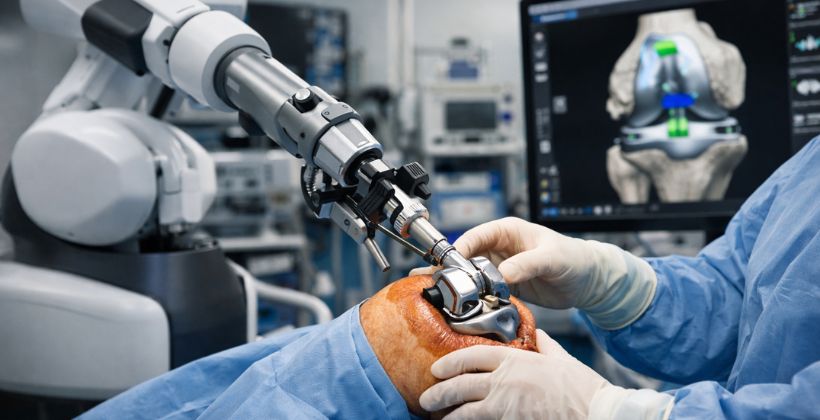
At Zynova Hospitals, we use advanced robotic knee surgery technology that is built to handle more than just the knee. Our robotic system performs robotic total knee replacement, robotic partial knee replacement, and robotic hip replacement, all with the same level of precision and care under one roof.
This blog walks you through the early warning signs of knee joint damage and helps you understand when it is time to consider robotic knee replacement surgery for lasting relief.
What Actually Happens to Your Knee When It Gets Damaged?
The knee is the largest joint in your body. It carries your full body weight with every step, squat, and climb. The cartilage inside the knee acts as a cushion between the bones, keeping movement smooth and pain-free. When that cartilage starts breaking down, the bones begin rubbing against each other. That is when the pain, swelling, and stiffness start.
The most common reasons this happens are:
- Osteoarthritis: The most common cause of knee damage. Cartilage slowly wears away over the years, mostly in people above 50. But younger people with a history of injury or high-impact sports can develop it early too.
- Rheumatoid Arthritis: An autoimmune condition where the body’s immune system attacks the joint lining itself, causing chronic swelling, cartilage damage, and bone loss.
- Post-Traumatic Arthritis: This develops after a knee fracture, ligament tear, or sports injury. Sometimes it shows up years after the original injury.
- Avascular Necrosis: When blood supply to the knee bone gets cut off, the bone tissue dies and the joint collapses from the inside.
In all of these cases, once the damage goes past a certain point, robotic total knee replacement becomes the most reliable long-term solution.
7 Signs You May Need Robotic Knee Replacement Surgery
Not every sore knee needs surgery. But there are clear signs that your joint damage has gone far enough that non-surgical options are no longer doing the job. Here are the seven signs that should push you to speak to an orthopedic specialist:
1. The Pain Does Not Go Away Even When You Rest
In the early stages, knee pain usually shows up after physical activity and settles once you rest. But when the pain sticks around even when you are sitting, lying down, or sleeping, it means the damage has gone deeper. At this stage, painkillers and anti-inflammatory medicines stop giving proper relief. This kind of persistent pain is one of the key signs you need knee replacement surgery.
2. Your Knee Swells Up and Stays Swollen
A little swelling after a long day is normal. But if your knee stays puffy for days at a time or swells back up quickly after settling, that is not normal. Chronic swelling means the inside of your joint is badly damaged and cannot heal on its own. This is one of the clearest early signs that you should get evaluated for robotic knee surgery.
3. You Cannot Straighten or Bend Your Knee Properly
When the knee joint is healthy, it bends and straightens without any trouble. As cartilage damage gets worse, the joint loses its range of motion. You may find it hard to fully straighten your leg, bend your knee to sit, climb stairs, or stand up from a chair. When basic movements start becoming difficult, it is time to take the warning seriously.
4. You Hear Grinding or Clicking or Feel the Knee Lock Up
A healthy knee is quiet and smooth. When the cartilage wears away, the bone surfaces grind against each other. You may notice:
- A crunching or grating sensation when you move the knee (called crepitus)
- Clicking or popping sounds with movement
- The knee suddenly locking or getting stuck for a moment
These are mechanical signs of serious cartilage loss. They are also important clinical indicators that an orthopedic specialist will look for when assessing a patient for advanced robotic knee surgery.
5. Your Knee Looks Different or Bent Out of Shape
As arthritis gets worse, the structure of the knee can change visibly. Some patients develop a bow-legged look (varus deformity), while others develop a knock-knee shape (valgus deformity). In some cases, one leg may appear shorter than the other. Visible deformity is a strong indicator that surgery is required. Robotic total knee replacement is especially useful in these situations because the robotic arm uses real-time 3D imaging to correct alignment with sub-millimetre precision, even in complex cases.
6. Knee Pain Is Stopping You from Living Your Life
When knee pain starts cutting into your daily routine, that is when it becomes a real problem. Ask yourself honestly:
- Have you stopped doing activities or hobbies you used to enjoy?
- Do you need a cane or support to walk?
- Is knee pain waking you up at night?
- Can you not walk or stand for more than 20 to 30 minutes?
If you said yes to most of these, your condition has gone far enough that robotic knee replacement surgery deserves a serious conversation with a specialist.
7. Nothing Else Is Giving You Relief Anymore
Doctors always try non-surgical options first. These include:
- Physiotherapy and muscle-strengthening exercises
- Anti-inflammatory medicines and painkillers
- Steroid injections or PRP (platelet-rich plasma) therapy
- Weight management and activity changes
- Knee braces and orthotics
If you have gone through these treatments properly and are still in pain, you have crossed the point where conservative management works. Robotic knee replacement surgery becomes the next step toward long-term, stable relief.
How Does Robotic Knee Surgery Actually Work?
Robotic knee surgery is not about a robot operating on you. Your surgeon is in full control throughout the procedure. The robotic system acts as a precision tool that helps the surgeon execute the surgical plan with a level of accuracy that is not possible with the human hand alone.
Here is how it works at Zynova Hospitals:
Step 1: CT Scan and 3D Planning Before Surgery
Before the procedure, a CT scan of your knee or hip is taken. This scan is used to create a detailed 3D model of your specific joint anatomy. Every angle, curve, and measurement of your joint is captured so that the surgical plan is built around you specifically, not a general template.
Step 2: A Surgical Plan That Is Yours Alone
Using the 3D model, your surgeon plans the exact size, angle, and position of the implant before surgery begins. The entire outcome can be simulated digitally before a single cut is made.
Step 3: The Robotic Arm Guides the Surgery
During the procedure, the robotic arm gives the surgeon real-time haptic feedback. If the surgeon moves even slightly outside the planned boundaries, the system responds immediately. This means:
- Bone cuts are precise to the sub-millimetre level
- Healthy bone, ligaments, and soft tissue around the joint are protected
- The implant sits exactly where it should for your anatomy and movement
The result is a surgery that is more accurate, less invasive, and sets you up for a better recovery and a longer-lasting implant.
Zynova’s Robotic Platform: Total Knee, Partial Knee, and Hip Replacement
At Zynova Hospitals, our robotic system is not limited to one type of joint replacement. The same advanced platform performs three distinct procedures with equal precision:
Robotic Total Knee Replacement
When arthritis has damaged the entire knee joint across all three compartments (inner, outer, and front), total knee replacement is the right option. The damaged bone surfaces are removed and replaced with carefully fitted implant components.
With robotic guidance, the prosthesis is aligned to your specific leg anatomy, ligament tension is balanced across the joint, and the result feels more stable and natural than a manually placed implant.
What Research Shows
Studies on robotic-assisted total knee replacement consistently show better implant alignment accuracy and fewer alignment errors compared to traditional manual techniques. The improvement in hip-knee-ankle (HKA) angle precision is significant across multiple clinical studies.
Robotic Partial Knee Replacement
If arthritis has only damaged one part of the knee (most often the inner compartment) and the rest of the joint is still healthy, a partial knee replacement is a much better option than removing the whole joint. Only the damaged portion is resurfaced, and everything else stays intact.
The benefits of robotic partial knee replacement are real and measurable:
- More bone is saved: Only the diseased part is addressed. Healthy tissue is left alone.
- More accurate than manual: Robotic guidance makes partial knee surgery significantly more precise than conventional techniques.
- Faster recovery: Smaller cut, less disruption, shorter stay in hospital.
- Feels closer to a natural knee: Because the healthy ligaments and cartilage stay in place, the knee tends to feel more like your own joint.
Younger and more active patients with early to mid-stage arthritis confined to one compartment are often good candidates for this option.
Robotic Hip Replacement
Our robotic system also handles the hip. For patients dealing with hip arthritis, avascular necrosis, or general hip joint deterioration, robotic hip replacement at Zynova brings the same planning precision and surgical accuracy to the hip joint.
What robotic hip replacement at Zynova means for you:
- Your hip anatomy is scanned and planned in 3D before surgery
- The robotic arm guides cup and stem placement to exact angles
- Leg length is restored accurately, avoiding post-surgery imbalance
- Less muscle and tissue damage means a faster, smoother recovery
Whether you need knee replacement, partial knee replacement, hip replacement, or a combination of these, Zynova’s robotic programme covers all three with the same standard of care and technology.
What You Actually Gain from Robotic Knee Replacement Surgery
| Benefit | What It Means for the Patient |
| Sub-Millimetre Precision | Bone cuts and implant placement go beyond what manual surgery can achieve. This reduces the risk of misalignment that leads to early implant failure. |
| Planned Around Your Joint | No standard templates. Your CT scan builds a 3D model of your unique anatomy, and the surgical plan is designed specifically for you. |
| Faster Recovery | Because the robotic system causes less trauma to surrounding tissue, patients get back on their feet sooner and with less post-operative pain. |
| Shorter Hospital Stay | Minimally invasive execution and faster early recovery often mean patients go home sooner compared to traditional surgery. |
| Longer Implant Life | A correctly placed implant wears evenly and lasts longer. Robotic accuracy directly improves the lifespan of your replacement. |
| Less Blood Loss | Targeted, controlled bone preparation during surgery results in lower blood loss than conventional techniques. |
| Better Patient Satisfaction | Between 80 and 90 percent of knee replacement patients report high satisfaction at one year. Robotic precision pushes those numbers even higher. |
Robotic Knee Replacement Recovery: What to Expect Week by Week
One of the first things patients ask is how long recovery takes. With robotic knee replacement surgery, recovery is generally faster and more comfortable than with traditional surgery because of how much less damage is done to the surrounding tissue.
Here is a realistic timeline:
Week 1 to 2: Getting Moving Again
- Most patients start walking with a walker or cane within 24 to 48 hours after surgery
- Swelling and pain are managed with medication and tend to peak around Day 3 to 5 before starting to settle
- Physiotherapy starts almost right away to work on restoring range of motion
Week 3 to 6: Building Independence
- Many patients walk without a support aid by the end of Week 4 to 6
- Driving is usually possible after 4 to 6 weeks once pain medication is stopped and cleared by the surgeon
- Light work and daily activities can be resumed during this period
Month 3 to 6: Getting Stronger
- Physiotherapy continues with a focus on strength and endurance
- Low-impact activities like swimming, cycling, and regular walking are introduced
- Most patients notice a significant drop in pain and better movement by Month 3
Month 6 to 12: Full Recovery
- Most patients reach full recovery within 6 to 12 months
- Long-term outcomes show that 80 to 90 percent of patients remain satisfied with their robotic knee replacement after one year and beyond
Zynova’s Approach to Robotic Knee Replacement Recovery
At Zynova Hospitals, recovery does not begin after surgery. It is planned before surgery. Our team pairs the robotic surgical program with a personalized rehabilitation plan designed around your specific procedure and recovery goals. Because robotic surgery minimizes tissue trauma, our patients typically start moving sooner and report feeling more comfortable earlier in recovery than they expected.
Are You a Candidate for Robotic Knee Replacement Surgery?
You may be a good candidate for robotic knee replacement surgery if any of the following apply to you:
- You have been diagnosed with moderate to severe knee arthritis, whether osteoarthritis, rheumatoid arthritis, or post-traumatic arthritis
- Your knee pain is constant and is getting in the way of daily activities
- X-rays or MRI scans show significant cartilage loss and reduced joint space
- Physiotherapy, medicines, and injections have not given you lasting relief
- Your knee looks visibly misaligned or unstable
- Pain at night is disrupting your sleep regularly
Age alone does not determine whether you need surgery. Most patients who undergo total knee replacement are between 50 and 80 years old, but the real deciding factor is how much the condition is affecting your quality of life, not how old you are.
For younger patients with damage limited to one compartment, robotic partial knee replacement may be a more appropriate option that preserves more of the natural joint.
Common Questions About Robotic Knee Replacement Surgery
Is the robot actually doing the surgery?
No. Your surgeon is in complete control throughout the procedure. The robotic system is a precision tool that helps the surgeon execute the planned surgery with greater accuracy. Think of it like a GPS for surgery. It keeps the surgeon on the planned path, but the surgeon is always the one making every decision and move.
Is robotic knee surgery safe?
Yes. Robotic-assisted knee replacement has been studied extensively and is a well-established procedure. Clinical data shows it is safe and effective, with better implant alignment and at least equivalent complication rates compared to traditional manual techniques.
Does Zynova’s robotic system also do hip replacement?
Yes. Zynova’s advanced robotic platform performs robotic total knee replacement, robotic partial knee replacement, and robotic hip replacement. The same technology and the same standard of precision is applied across all three procedures. Patients needing hip or partial knee surgery benefit from the same robotic accuracy as those undergoing full knee replacement.
How do I know if I need total or partial knee replacement?
It depends on how much of your knee is damaged. If only one compartment is affected and your ligaments are intact, partial knee replacement may work well for you. If the entire joint is involved, total knee replacement is the right choice. At Zynova, your orthopaedic specialist will assess your imaging, symptoms, and lifestyle to recommend the best option.
Will I need physiotherapy after surgery?
Yes, and it is a critical part of getting a good outcome. Physiotherapy helps you regain strength, range of motion, and confidence in movement after robotic knee surgery. At Zynova, your rehabilitation programme begins early and is tailored to your specific recovery pace and goals.
Do Not Wait Until the Pain Gets Worse
Knee and hip pain does not fix itself when ignored. The longer joint damage goes without treatment, the harder it becomes to treat well. If you are noticing the signs covered in this blog, it is worth getting a proper orthopaedic evaluation now rather than waiting.
At Zynova Hospitals, our robotic joint replacement programme covers total knee replacement, partial knee replacement, and hip replacement with advanced robotic technology and experienced orthopaedic surgeons. We build your surgical plan around your anatomy, your goals, and your life.
Book Your Consultation at Zynova Hospitals Pvt. Ltd.
Our orthopaedic specialists are available to evaluate your condition, explain your options, and guide you toward the right treatment plan for your situation. Get in touch with Zynova Hospitals today and take the first step toward getting back to the life you want to live.
| Book Your Consultation at Zynova Hospitals
Our orthopaedic specialists are available to evaluate your condition, explain your options, and guide you toward the right treatment plan for your situation. Get in touch with Zynova Hospitals today and take the first step toward getting back to the life you want to live. |
Leave a Comment