Best Hospital in Ghatkopar, Mumbai | Zynova Shalby Hospital


Top Orthopedic Hospitals in Mumbai: How to Choose the Best One
- Home
- Top Orthopedic Hospitals in Mumbai: What to Look for Before Choosing One
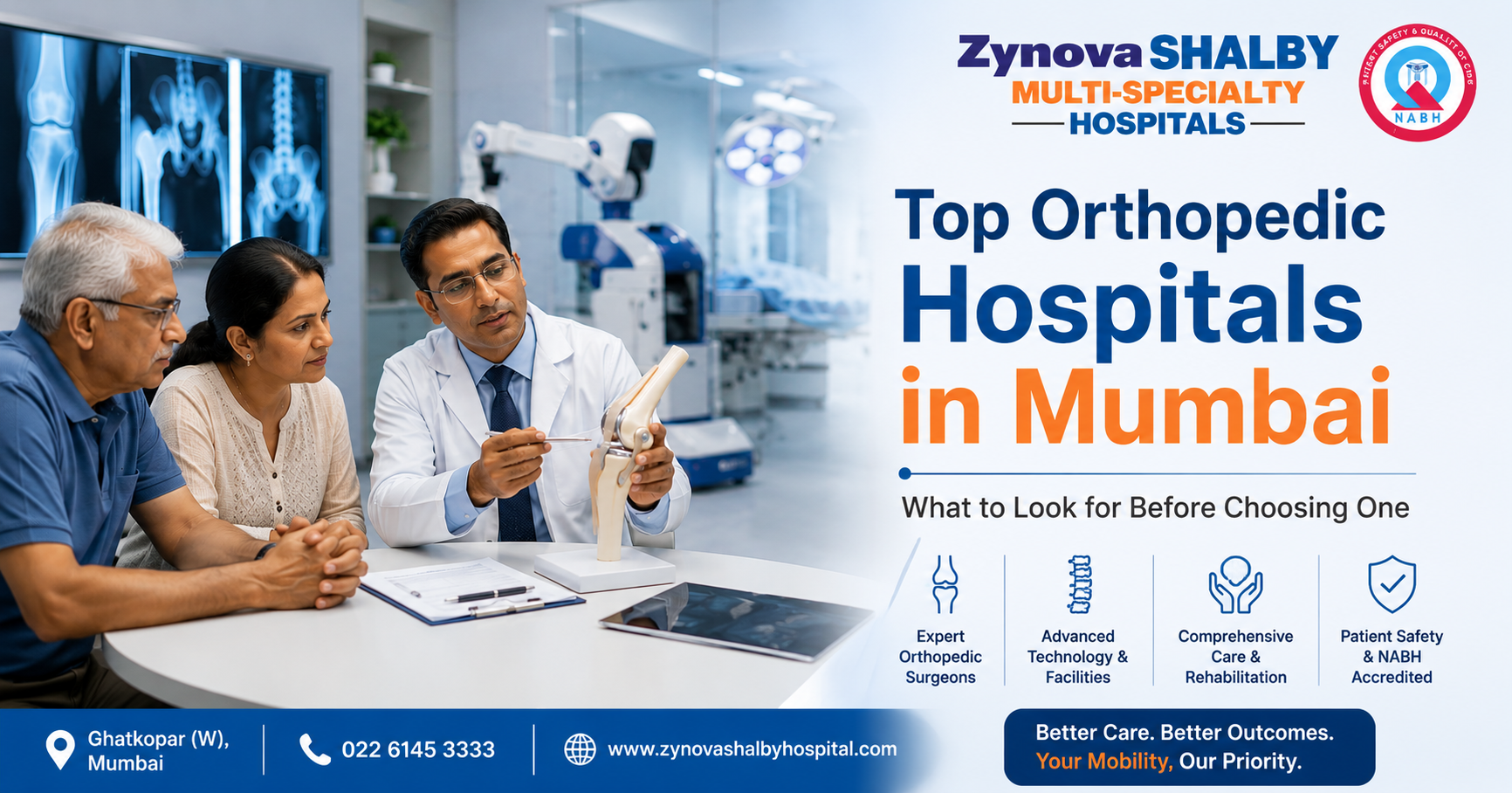
- admin
- 0 Comments
If you or a family member has been told you need knee surgery, a hip replacement, spine treatment, or care for a fracture, the first real decision isn’t which procedure to choose. It’s which hospital to trust with it. A quick search for the best orthopedic hospital in Mumbai throws up dozens of names, star ratings, and claims of “world class care,” and most of them sound the same on the surface.
This guide is written for that exact stage of the decision, before you’ve picked a procedure or a surgeon, when you’re still figuring out how to choose an orthopedic hospital that won’t let you down. We’ll walk through the specific things worth checking, how Mumbai’s orthopedic care landscape looks right now, and where Zynova Shalby Hospital fits into that picture.
Why the Hospital Choice Matters More Than People Realize
Orthopedic outcomes depend on more than a skilled pair of hands in the operating room. Infection control protocols, the physiotherapy team that sees you the day after surgery, how quickly a nurse responds at 2 a.m., and whether the hospital has handled a case like yours before, all of that adds up to the result you actually get. Two patients with the same diagnosis, operated on with the same implant, can have very different recoveries depending on the hospital around them.
That’s why searches like orthopedic hospital near me or trusted orthopedic hospital near me are only a starting point. Location gets you in the door. What happens after that is where the real comparison begins.
What to Actually Check Before You Choose
1. Surgeon Experience and Specialization
Ask how many procedures similar to yours the surgeon performs in a year. That number tells you more than how many years they’ve practiced. A best orthopedic doctor in Mumbai for knee replacements may not be the right fit for a complex spine case, and that’s worth checking before you commit. At a properly staffed multispeciality orthopedic hospital in Mumbai, you should find surgeons with distinct sub-specializations, joint replacement, trauma, spine, sports injury, instead of one generalist handling everything.
2. Accreditation and Infection Control
NABH accreditation isn’t just a certificate on a wall. It means the hospital follows documented protocols for sterilization, operation theatre hygiene, and post-surgical infection monitoring. Before you commit, ask directly about the hospital’s surgical site infection rate. A hospital confident in its numbers will share them without hesitation.
3. Technology and Equipment
Robotic-assisted and computer-navigated joint replacement systems help with implant precision, but they’re only useful when paired with a surgical team trained to use them well. When you’re checking a best joint replacement hospital in India, look at whether the technology is a genuine part of daily practice or a single showcase machine mentioned only in marketing material.
4. Post-Operative Care and Physiotherapy
Recovery from a fracture, hip surgery, or spine procedure happens mostly after the operation is over. A hospital that starts physiotherapy within hours of surgery, and has dedicated rehabilitation staff rather than a shared general ward team, tends to produce faster, more reliable recoveries. This matters just as much for a best hospital for fracture treatment in Mumbai as it does for planned joint replacements.
5. Patient Outcomes and Reviews
Orthopedic hospital ratings in Mumbai are easy to find online, but read past the star average. Look for specifics: how patients describe pain management, how quickly they were mobilized, and whether follow-up care matched what was promised before surgery.
6. Transparent Costing
A trustworthy hospital gives you a clear cost breakdown, implant charges, room category, physiotherapy sessions, before the procedure, not after. If a hospital hesitates when you ask for numbers in writing, treat that as a warning sign rather than a formality you can skip.
7. Emergency and Trauma Readiness
Fractures and accidents don’t wait for appointment slots. A hospital with round-the-clock trauma care and an orthopedic surgeon on call is a meaningful safety net, especially if you’re comparing options for a family member rather than a planned surgery.
How Mumbai’s Orthopedic Hospital Landscape Looks Today
Mumbai has no shortage of established names in orthopedic care, with large multispecialty and quaternary care centers spread across the city, each with their own strengths in joint replacement, spine surgery, or sports medicine. Most of these hospitals compete on similar ground: recognized accreditation standards, robotic-assisted surgery options, and senior consultants with international fellowships.
What actually separates one hospital from another isn’t the technology. Most major centers now offer some form of robotic or computer-assisted surgery, so that alone stopped being a differentiator a while back. It comes down to how well the surgical team, nursing staff, and physiotherapy unit actually work together on your recovery, and whether you can get to follow-up appointments without it eating your whole day.
Where Zynova Shalby Hospital Fits
Zynova Shalby Hospital in Ghatkopar West is a NABH-accredited, 100-bed multispeciality hospital that has been part of Mumbai’s healthcare landscape since 2007, with a long-standing focus on high-volume joint replacement surgery. It has also positioned itself as a robotic surgery hospital in Mumbai, offering computer and robotic-assisted joint replacement as a routine part of its orthopedic program rather than a one-off feature. On patient review platforms, the hospital currently holds close to a 4.8 out of 5 rating from patient feedback, which is worth checking yourself before you rely on any single review site.
For patients specifically searching for an orthopedic hospital in Ghatkopar or an orthopedic surgeon in Ghatkopar, here’s what the hospital brings to the checklist above:
- A dedicated orthopedic and joint replacement department, with surgeons handling primary and revision joint replacements, arthroscopic procedures, spine conditions, and fracture management, rather than treating orthopedics as a side service.
- Surgeons with focused sub-specializations, including robotic and computer-assisted joint replacement, so patients aren’t routed to a general surgeon for a specialized procedure.
- NABH accreditation, covering documented infection control and patient safety protocols.
- 24×7 emergency and trauma care, relevant for fracture patients who need immediate attention rather than a scheduled consultation.
- A location in Ghatkopar West, close to Ghatkopar station and roughly 20 minutes from the airport, which matters for patients who need multiple follow-up visits during recovery.
- Advanced imaging and minimally invasive surgical equipment, used as part of routine practice rather than reserved for select cases.
- In-house diagnostics and a dedicated operation theatre setup, so imaging, pre-surgical workup, and the procedure itself don’t require shuttling between different facilities.
- A multi-disciplinary orthopedic team, with more than a dozen consulting orthopedic surgeons across sub-specialties, backed by dedicated physiotherapists for post-surgical rehabilitation.
None of this replaces the conversation you should have directly with a surgeon about your specific case. But if you’re building a shortlist of top 10 orthopedic hospitals in Mumbai to research further, these are the kinds of details worth confirming for each name on your list, and Zynova Shalby is worth including in that comparison.
Common Orthopedic Conditions and Procedures Treated
Patients often assume “orthopedic hospital” means joint replacement alone. In practice, a properly equipped orthopedic department covers a lot more ground, and it helps to know the range before you assume a hospital can or can’t handle your case:
- Knee and hip replacement, both primary and revision surgeries, for arthritis, injury, or joint degeneration
- Fracture and trauma care, including complex fractures that need surgical fixation
- Spine conditions, from herniated discs to degenerative spine disease
- Arthroscopic procedures for ligament tears and sports injuries
- Shoulder and elbow surgery, often overlooked when people think of orthopedics as mainly a knee-and-hip specialty
- Pediatric orthopedic care, for growth-related bone and joint conditions in children
- Joint preservation techniques, for patients who want to delay or avoid a full replacement where possible
If a hospital’s website only talks about one or two of these, it’s worth asking directly whether the rest are handled in-house or referred elsewhere.
A Simple Checklist Before Your First Consultation
Before you book an appointment anywhere, it helps to walk in with a short list of questions:
- How many procedures like mine does the surgeon perform each year?
- What is the hospital’s infection rate for this type of surgery?
- Who handles physiotherapy, and when does it start after surgery?
- Is the full cost, including implants, provided in writing before the procedure?
- What emergency support is available if something needs attention after discharge?
A hospital that answers these clearly and without hesitation is usually one worth trusting with your recovery.
Frequently Asked Questions
How do I know if an orthopedic hospital is actually good, not just well marketed?
Ask for specifics: the surgeon’s annual case volume for your exact procedure, the hospital’s infection rate, and how physiotherapy is structured after surgery. A hospital that answers with real numbers rather than general reassurance is usually the safer bet.
Is a bigger hospital always a better choice for orthopedic treatment?
Not necessarily. Bed count and building size say little about surgical outcomes. A smaller, focused orthopedic department with experienced surgeons and a strong physiotherapy team can outperform a larger general hospital where orthopedics is just one department among many.
Does robotic surgery guarantee a better outcome?
Robotic and computer-assisted systems improve implant precision, but the surgeon’s experience with that specific system matters just as much as the technology itself. Ask how many robotic-assisted procedures the surgeon has personally performed, not just whether the hospital owns the equipment.
What should I bring to my first orthopedic consultation?
Prior imaging (X-rays, MRI, or CT scans if you have them), a list of current medications, and a written summary of your symptoms and how long you’ve had them. This saves time and helps the surgeon give you a more accurate first opinion.
How soon can I expect to walk after a knee or hip replacement?
This varies by patient and procedure, but many hospitals now aim to get patients standing or taking assisted steps within the first day of surgery. Ask your specific hospital what their standard timeline looks like, since this is a fair way to gauge how proactive their rehabilitation approach is.
Final Thoughts
Choosing among the best orthopedic hospitals in Mumbai isn’t about picking the name with the most billboards. It comes down to surgeon expertise in your specific condition, documented safety standards, real post-operative support, and a location you can realistically return to for follow-up care. Zynova Shalby Hospital in Ghatkopar checks each of these boxes for patients across Mumbai and its suburbs, whether you’re comparing options as a best bone and joint hospital in Mumbai or looking for a top rated orthopedic surgeon in Mumbai for a specific condition.
If you’re at the stage of comparing hospitals rather than researching a specific procedure, that’s exactly the right place to start. Once you’ve narrowed your list, a direct consultation will tell you far more than any review ever could.
Leave a Comment