Best Hospital in Ghatkopar, Mumbai | Zynova Shalby Hospital


Common Monsoon Diseases in India: Symptoms & Treatment
- Home
- 10 Common Monsoon Diseases in India: Symptoms, Prevention & Treatment
- admin
- 0 Comments
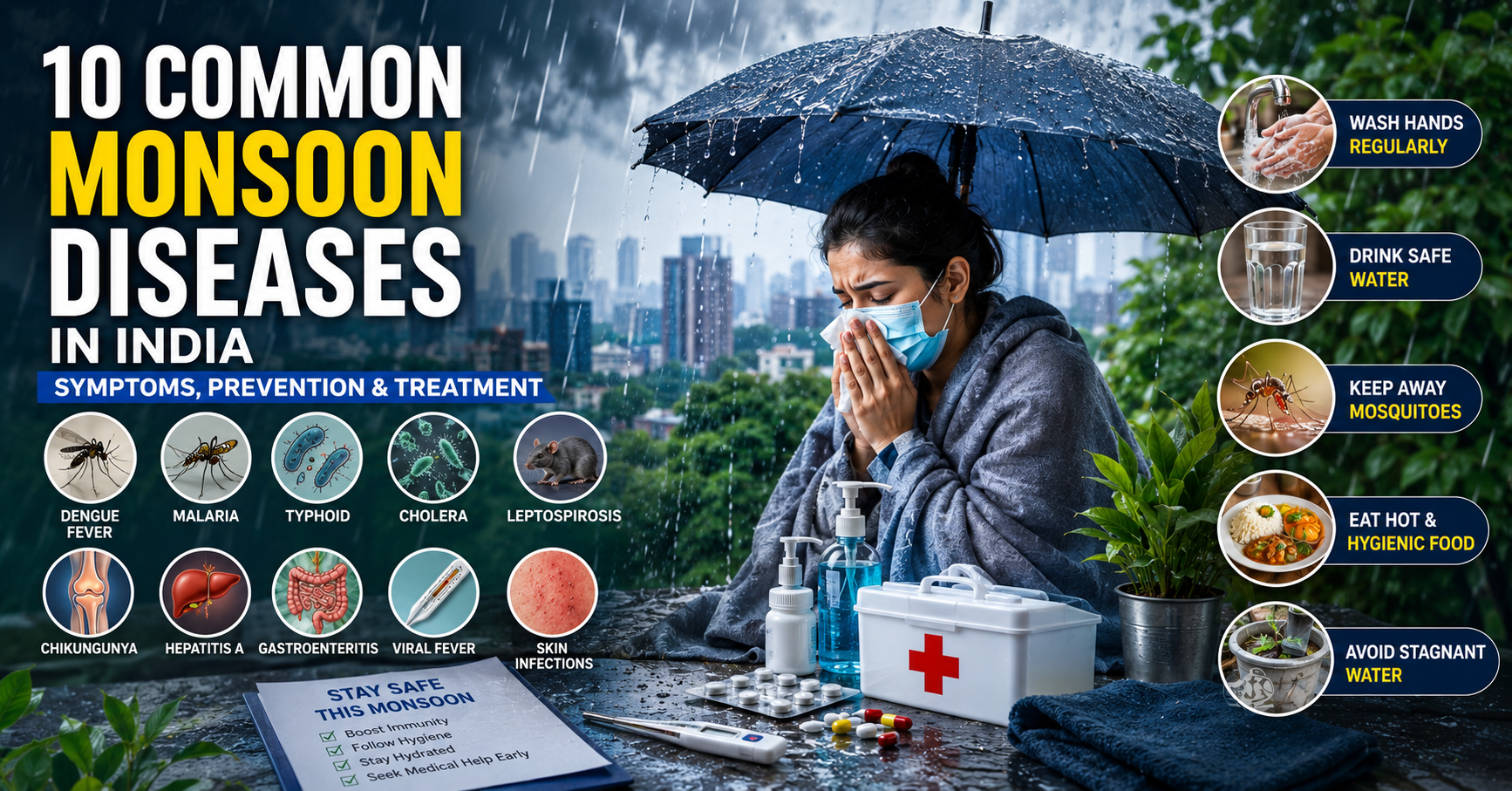
Monsoon diseases in India kill and hospitalize thousands of people every single year, and most of those cases were preventable. The moment the rains arrive, common monsoon diseases like dengue fever, malaria, typhoid, cholera, leptospirosis, chikungunya, hepatitis A, gastroenteritis, viral fever, and skin infections start spreading fast across every city and town. These are the 10 diseases during rainy season in India, responsible for the sharp rise in hospital admissions every year. Catching monsoon diseases symptoms early and getting the right monsoon diseases treatment quickly keeps most people out of hospital. But waiting too long turns a simple fever into something far more serious. This guide covers monsoon diseases symptoms, monsoon diseases prevention, how each disease spreads, who is at highest risk, and when to see a doctor immediately. If you are in Mumbai, Zynova Shalby Hospital in Ghatkopar provides expert monsoon fever treatment and same-day diagnosis for all monsoon diseases in Mumbai.
Why Diseases During Rainy Season in India Get So Bad
Waterlogging breeds mosquitoes overnight. Floodwater gets into drinking sources before anyone notices. Food spoils faster in the heat and humidity. These three things together create the conditions that drive both waterborne diseases during monsoon and vector borne diseases in monsoon India every year.
In July 2024, Mumbai alone logged 797 malaria cases, 535 dengue cases, 141 leptospirosis cases, and 1,239 gastroenteritis cases as per BMC data. The city sees this every monsoon. Knowing what to look for, and when to go to a doctor, genuinely saves lives.
Certain groups face the highest risk: children, elderly people, pregnant women, diabetic patients, and anyone with low immunity. If someone in your family falls into these categories, take monsoon precautions seriously from day one of the season.
1. Dengue Fever: Dengue Fever Symptoms & Dengue Fever Treatment India
Dengue spreads through the bite of the Aedes mosquito, which breeds in clean stagnant water: flower pots, water tanks, tyres, anything left outside. Dengue fever symptoms appear 5 to 7 days after the bite and include sudden high fever, severe headache, pain behind the eyes, muscle and joint pain intense enough to be called “breakbone fever,” skin rash, fatigue, and nausea. In serious cases, bleeding gums and a rapidly falling platelet count are warning signs.
Dengue fever treatment in India has no specific antiviral. The focus is hydration, rest, and paracetamol for fever control. Aspirin and ibuprofen must be avoided as they increase bleeding risk. Severe dengue needs hospital admission and platelet monitoring.
How to prevent dengue: Empty every water-holding container around your home once a week. Use mosquito repellents during early morning and evening. Wear full-sleeved clothing. Install mosquito screens and use nets at night.
Go to a doctor immediately if fever lasts more than 3 days, if any bleeding appears, or if platelet count drops.
2. Malaria: Malaria Symptoms India & Malaria Treatment Mumbai
Malaria is one of the most serious vector borne diseases in monsoon India. It spreads through the bite of the female Anopheles mosquito, which thrives in stagnant and dirty water. Malaria symptoms in India can appear anywhere from 7 to 30 days after the bite, which is why many people do not connect their fever to a mosquito bite at all. Watch for recurrent fever with chills and sweating, severe headache, muscle aches, fatigue, and nausea.
Malaria treatment in Mumbai starts with a blood smear test or rapid diagnostic test to confirm the infection. A doctor then prescribes the right antimalarial medication. Never self-medicate for malaria. The wrong drug makes things worse.
How to prevent malaria in India: Eliminate any mosquito breeding site near your home. Sleep under insecticide-treated mosquito nets. Keep doors and windows shut after sunset. Use mosquito repellents or coils indoors.
3. Typhoid: Typhoid Symptoms Treatment
Typhoid is a waterborne disease during monsoon caused by Salmonella typhi bacteria in contaminated food or water. It spreads fast when floodwater gets into municipal water supplies, which happens regularly during heavy rains. Typhoid symptoms and treatment go hand in hand. Catch it early and a course of antibiotics clears it. Miss it and untreated typhoid can cause intestinal perforation, which is life-threatening.
Symptoms include prolonged high fever that gets worse day by day, abdominal pain, weakness, loss of appetite, and sometimes constipation or diarrhoea. Get the typhoid vaccine before monsoon starts. Drink only boiled or filtered water through the season.
4. Cholera: Cholera Symptoms India
Cholera is one of the fastest-moving waterborne diseases during monsoon. It spreads through Vibrio cholerae bacteria in contaminated food or water. Cholera symptoms in India are hard to miss: sudden profuse watery diarrhoea that looks like rice water, severe vomiting, rapid dehydration, muscle cramps, and weakness. Cholera can kill within hours if untreated. Dehydration is the real danger, not the bacteria itself.
Start oral rehydration salts immediately. Severe cases need IV fluids and hospital care. Boil all drinking water. Wash hands with soap before every meal and after every toilet visit.
5. Leptospirosis: Leptospirosis Symptoms Mumbai
Leptospirosis is a disease Mumbai residents know well, and for good reason. Every monsoon, floodwater mixes with rat urine carrying Leptospira bacteria, and anyone walking through those flooded streets, even briefly, is at risk. Leptospirosis symptoms in Mumbai include sudden high fever, severe calf muscle pain, red eyes, headache, and vomiting. Severe cases cause jaundice, kidney failure, or meningitis.
The tricky part is that leptospirosis symptoms look a lot like malaria or viral fever. The severe leg pain after walking in floodwater is the key sign. Do not ignore it. Antibiotics like doxycycline or penicillin, prescribed by a doctor are the standard treatment. Delay makes it much more dangerous.
Wear rubber boots if you must walk in flooded areas. Cover any cuts or wounds. Wash your hands and feet thoroughly after any contact with floodwater.
6. Chikungunya: Chikungunya Symptoms Treatment
Chikungunya spreads through the same Aedes mosquito as dengue. The symptoms overlap enough to cause confusion, but one thing gives chikungunya away: the joint pain. Chikungunya symptoms and treatment involve sudden high fever, skin rash, headache, fatigue, and joint pain so bad it can make walking difficult. That joint pain, particularly in the hands, wrists, and ankles, can last for weeks or even months after the fever is gone.
There is no specific antiviral. Treatment is rest, fluids, and paracetamol. Avoid aspirin. Physical therapy helps with prolonged joint pain. Prevention is the same as dengue: eliminate breeding sites and use repellents.
7. Hepatitis A: Hepatitis A Monsoon, India
Hepatitis A during monsoon in India is more common than most people realise. It spreads through food and water contaminated with infected faecal matter, including raw vegetables, undercooked shellfish, or unreliable water sources are the usual culprits. Symptoms include fever, fatigue, nausea, abdominal discomfort, dark urine, and yellowing of the eyes and skin. Children are especially vulnerable.
There is no specific drug. Rest and proper nutrition let the liver heal on its own. Most people recover fully in a few weeks. The Hepatitis A vaccine given in two doses is highly effective and worth getting before the season starts. If the eyes turn yellow, see a doctor the same day.
8. Gastroenteritis: Gastroenteritis Monsoon
Gastroenteritis during monsoon is one of the most common complaints every rainy season. Bacteria, viruses, or parasites in contaminated food or water cause inflammation in the gut. Symptoms include watery diarrhoea, vomiting, stomach cramps, mild fever, and loss of appetite. It sounds manageable, and often it is, but dehydration is the real risk, especially for young children and elderly patients.
Oral rehydration salts immediately. Eat simple food like rice, banana, or toast. Avoid dairy, spicy, and fried food while recovering. If there is blood in the stool or vomiting does not stop, go to a doctor. Do not eat street food during monsoon. Drink only filtered or boiled water.
9. Viral Fever: Viral Fever Monsoon India
Viral fever during monsoon in India spreads easily because the sudden weather changes knock down immunity and viruses travel fast in crowded spaces. Mumbai’s local trains and offices are practically viral fever factories during peak monsoon. Symptoms include moderate to high fever, body aches, sore throat, cough, runny nose, and fatigue that can drag on for days.
Viral fever monsoon treatment is rest, fluids, and paracetamol. Most cases clear in 3 to 5 days. But if fever does not break in 3 days or climbs above 103°F, get a blood test. Dengue, malaria, and typhoid all start with similar symptoms and you cannot tell them apart without testing.
10. Skin Infection Rainy Season: Causes & Treatment
Skin infection during rainy season is something most people underestimate until it spreads. The combination of constant moisture, sweat, and warmth is ideal for fungal and bacterial growth, especially in skin folds. Ringworm and athlete’s foot cause red, itchy, circular patches or cracking between the toes. Folliculitis shows up as pus-filled bumps at hair follicles. Impetigo, a bacterial infection common in children, presents as crusty, honey-coloured sores.
Use antifungal creams or powders for fungal infections. Bacterial infections may need antibiotic tablets. Change into dry clothes as soon as you get wet. Dry your feet between the toes thoroughly. Do not walk barefoot in waterlogged areas.
Warning Signs: Fever During Monsoon When to See a Doctor
Most people wait too long. Here is a simple rule. Three days of fever during monsoon means a doctor visit, not another day of rest-and-see.
Go to a monsoon disease hospital in Mumbai immediately if you or anyone in your family has: fever lasting more than 3 days, high fever above 104°F, blood in stools or vomit, severe vomiting that will not stop, rash with joint pain, yellowing of eyes or skin, extreme weakness or confusion, no urine output for more than 8 hours, or calf muscle pain with fever after walking in floodwater.
Fever during monsoon, when to see a doctor, the answer is sooner than you think.
Monsoon Health Tips India: Prevention Checklist
These monsoon diseases prevention habits take five minutes to set up and save serious trouble:
Drink only boiled or filtered water through the entire season. Empty every water-holding container around your home every week. This one step cuts mosquito breeding dramatically. Avoid street food. Wash hands before eating and after coming home. Get vaccinated for typhoid and Hepatitis A before monsoon arrives. Use mosquito repellents daily and nets at night. Change out of wet clothes immediately. Avoid walking through floodwater.
Zynova Shalby Hospital, Ghatkopar: Monsoon Doctor Ghatkopar & General Medicine Ghatkopar Mumbai
Monsoon diseases in Mumbai hit hard and they hit every year. Rainy season illness in Mumbai covers everything from mild viral fever to serious leptospirosis and dengue, and the symptoms overlap enough that self-diagnosis is genuinely risky.
At Zynova Shalby Hospital, Ghatkopar, experienced doctors in general medicine in Ghatkopar, Mumbai handle the full range of monsoon illnesses with proper blood testing and accurate diagnosis. If you are looking for a fever doctor in Ghatkopar, the team here provides same-day consultation and testing for all monsoon-related fevers. Whether you need monsoon fever treatment, suspect dengue or malaria, or just want to be sure that fever is nothing serious, Zynova Shalby Hospital is the right place to go.
Zynova Shalby Hospital is a trusted monsoon disease hospital in Mumbai, your monsoon doctor in Ghatkopar, and one of the best fever doctors in Mumbai for accurate diagnosis and timely treatment when it matters most.
Leave a Comment